
Libraries – Safeguards of Democracy …or are they?
What happens when an institution built to safeguard democracy becomes part of the threat to it? This question drives Save Troy: Liberate The Library, a short essay I wrote for Bibliothek & Gesellschaft (Libraries & Society), a newly launched book series published by Brill De Gruyter. Its first volume, Bibliothek und Demokratie (Libraries & Democracy), pairs scholarly analysis with micro-essays from practitioners — a participatory format, edited by LIS professor Frauke Schade (HAW Hamburg), that deliberately opens the conversation to all voices.
My perspective owes much to my role at the Kula Academy, where I experience firsthand how colleagues and collaborators critically rethink what libraries and archives can be in modern society — and to the tireless scholarly and professional work in memory institutions here and elsewhere.
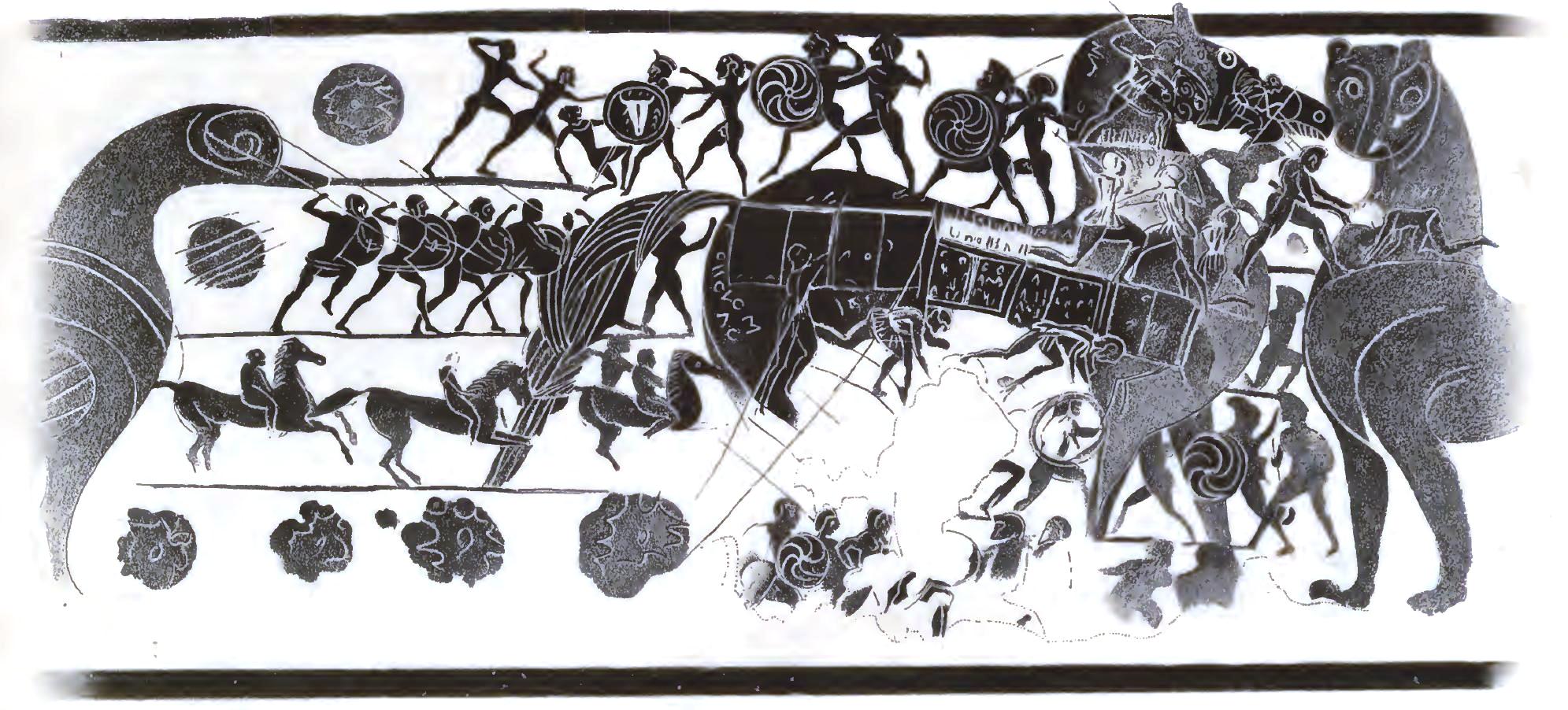
A Trojan Horse

The essay makes a deliberately polemical argument: discussions about libraries and authoritarianism too often focus on external attacks — book bans, political intimidation — while overlooking that libraries are inherently vulnerable through the very societal mandates that make them essential — and thus are by extension the liberal democracies they serve. They have the potential to become Trojan horses enabling an autocratic takeover.
But I even go one step further, highlighting a vector along which many libraries already contribute to repressive structures around the globe: their complicity with the protagonists of surveillance capitalism. Libraries feed these corporations large portions of their budgets as revenue and — though the essay does not elaborate on this — sometimes even surrender their users’ data. A concern that grows more urgent in light of current events.
Library Budgets Patrolling Borders
Anyone who has followed the recent ICE raids and their fallout in Minneapolis and other US cities can see library budgets in action: the multinational corporations that supply the surveillance infrastructure behind such operations are also the parent companies of publishers and vendors that libraries depend on for journals, databases, and technical information infrastructure. And the issue is by no means new. Inaugural Kula International Visiting Fellow Lambert Heller of Germany’s Leibniz Information Centre for Science and Technology (TIB) Hanover drew attention to it in 2021 by co-launching the StopTrackingScience initiative together with other concerned information professionals. The petition highlights not only the extractive and unethical business models underlying these surveillance tools and how library budgets sustain them, but also the profiling of individual scholars and academic communities by these data cartels.
From Custodians to Catalysts
The essay ends with a call for self-liberation. If libraries want to remain engines of democracy, they must reclaim technical sovereignty, their ethical integrity, and consistently promote open principles in knowledge production. Most importantly, they need to evolve their role from mere custodians of information to also become facilitators of community-based knowledge production and preservation – letting go of the gatekeeper function where appropriate.
This connects directly to Kula’s growing body of work. The Sersal Project, for example, co-led by Kula postdoc Nathaniel Brunt, exemplifies post-custodial archiving: historical visual material is not locked away in institutional vaults but its historical contexts and stories are uncovered and documented together with Yazidi diaspora communities and then returned to them.
Post-Custodial Turn: Library Edition?
But what would such an approach mean for libraries — institutions that curate knowledge and provide access to it rather than preserving unique records? What would post-custodial librarianship actually look like? Is the distinction between the work of libraries, archives, and other memory institutions even relevant to the post-custodial turn? Or shouldn’t this approach be understood from a results-based perspective anyway? The essay is meant to provoke initial reflection, within the profession and beyond. The rest is up for debate — and that debate should start now.
The full essay will appear in Bibliothek und Demokratie, published by Brill De Gruyter.
The book series Bibliothek & Gesellschaft invites participation. If you want to contribute your experiences, questions, or points of contention on the relationship between libraries and democracy, find all information at bibliothekundgesellschaft.de/mitmachen.