
From 31 August to 4 September, UVic Libraries and Kula: Library Futures Academy welcome a delegation of eight library, archive, and information science professionals from Germany. The week is hosted under the patronage of the German Consulate General in Vancouver.
The delegation is co-led by Lambert Heller, head of the Open Science Lab (OSL) at TIB Hannover, together with OSL deputy head and professor for Information Management at Hochschule Hannover – University of Applied Sciences and Arts (HSH), Ina Blümel.
The other members come from seven institutions across six German states, and include university librarians, Library and Information Science professors, a faculty dean, and the chair of the German Library Association (dbv).
What brings them here
For Lambert Heller, the visit is also a homecoming: he returns to UVic after having served as Kula’s inaugural International Visiting Fellow in 2025. By organizing this international exchange, Lambert is carrying on his role as a Kula alumnus by extending his close relationship with UVic Libraries and the Library Futures Academy to his broad network of German stakeholders.
The delegation describes themselves as a group of learners: colleagues who want to see, on the ground, how libraries and archives in this region are meeting the digital transition, and how initiatives like Kula are making it their mission to explore the future of librarianship and other GLAM professions.
Four themes run through the week:
- Digital sovereignty — what it means to build and govern knowledge infrastructure that does not depend on a handful of American platforms
- Open science and open GLAM — open access, open data, the infrastructures that carry them, and the role of galleries, libraries, archives, and museums in building, maintaining, and utilizing them.
- Contested and marginalized digital cultural heritage, with particular attention to the Indigenous cultural heritage
- Research data management and information literacy, including the role of AI in library services and LIS teaching
Alongside meetings across campus, the centrepiece of the week is a mini symposium on September 2nd, where members of the German delegation will each give short insights into their professional work and research.
The delegation continues to Vancouver the following week for meetings at UBC, Simon Fraser University, and other institutions. Kula will be represented there as well.
Meet the delegates
Lambert Heller, MA LIS
TIB Hannover — Lower Saxony

Read Lambert’s full bio
Lambert Heller heads the Open Science Lab at TIB Hannover and was Kula’s inaugural International Visiting Fellow (July–September 2025). He works on open science, digital sovereignty, and digital knowledge infrastructures, with a long-standing interest in cultural memory and memorial work. He also studies archives at risk, and has worked on integrating Wikidata and Wikimedia Commons into research data practice.
Research focus: Open science, knowledge infrastructures, cultural memory, Wikidata and linked open data
ORCID: 0000-0003-0232-7085
Prof. Dr. Ina Blümel
Hochschule Hannover – University of Applied Sciences and Arts (HSH) & TIB Hannover — Lower Saxony

Read Ina’s full bio
An architect by training and a professor of library and information science at HSH, Ina Blümel is deputy head of TIB’s Open Science Lab. Her research centres on digital research infrastructures and open science. She also works on open GLAM and cultural-heritage metadata, including the contextualization of 3D models through projects such as NFDI4Culture.
Research focus: Digital research infrastructures, open science, open GLAM, cultural-heritage metadata
ORCID: 0000-0002-3075-7640
Antje Theise, MA LIS
Rostock University Library; German Library Association (dbv) — Mecklenburg-Vorpommern

Read Antje’s full bio
Antje Theise directs Rostock University Library and chairs the German Library Association (dbv). Trained as a classical philologist, she works on rare books and special collections, and drives digitization and digital-humanities projects that connect historical collections to current research tools. For this exchange she has named a broader set of interests: open science, open GLAM, cultural heritage, organizational strategy and change management, citizen science, and democratic values in library practice.
Research focus: Rare books and special collections, digitization, digital humanities
ORCID: 0000-0001-7186-3522
Prof. Dr. Christian Wartena
Hochschule Hannover – University of Applied Sciences and Arts (HSH) — Lower Saxony

Read Christian’s full bio
Christian Wartena is a professor of library and information science at Hochschule Hannover. His current work looks at large language models in GLAM settings, distributional semantics, and keyword extraction. He also publishes on lexical semantics, morphology, and natural language processing in legal technology.
Research focus: Distributional semantics, keyword extraction, NLP, LLM pedagogy, legal tech
ORCID: 0000-0001-5483-1529
Prof. Dr. Claudia Frick
TH Köln – Cologne University of Applied Sciences — North Rhine-Westphalia

Read Claudia’s full bio
A meteorologist and a professor of library and information science (LIS) at TH Köln, Claudia Frick works where LIS meets gender and queer studies. Claudia is one of the founding members of the Queerbrarians, a German network of LGBTQIA+ GLAM professionals, students, and scholars. She also researches science communication, including in climate change studies. For their climate podcast, Claudia and her co-host Florian Freistetter received the reputable Austrian Research Association (ÖFG)’s Prize for Science Journalism 2026.
Research focus: Science communication, climate communication, queer and gender studies in LIS, open science
ORCID: 0000-0002-5291-4301
Prof. Dr. jur. Ellen Euler, LL.M.
FH Potsdam – University of Applied Sciences — Brandenburg

Read Ellen’s full bio
A lawyer by training, Ellen Euler is Dean of the Faculty of Information Sciences at the University of Applied Sciences Potsdam (FH Potsdam). Her research and teaching focus on open access, open data, open science, information and copyright law, the digitization of cultural heritage, and research assessment reform. She led the adaptation of version 1.0 of the Creative Commons licences for Germany and was responsible for the bottom-up process that resulted in Brandenburg’s Open Access Strategy. She is the academic director of the Coordination and Competence Centre for Open Access in Brandenburg, which emerged from this process and is an associate member of CoARA, the Coalition for Advancing Research Assessment.
Research focus: Open access, diamond open access, research assessment, copyright law, cultural-heritage digitization
ORCID: 0000-0002-8897-420X
Niklas Hartmann, MA LIS
Hamburg University of Technology (TUHH) Library — Free and Hanseatic City of Hamburg
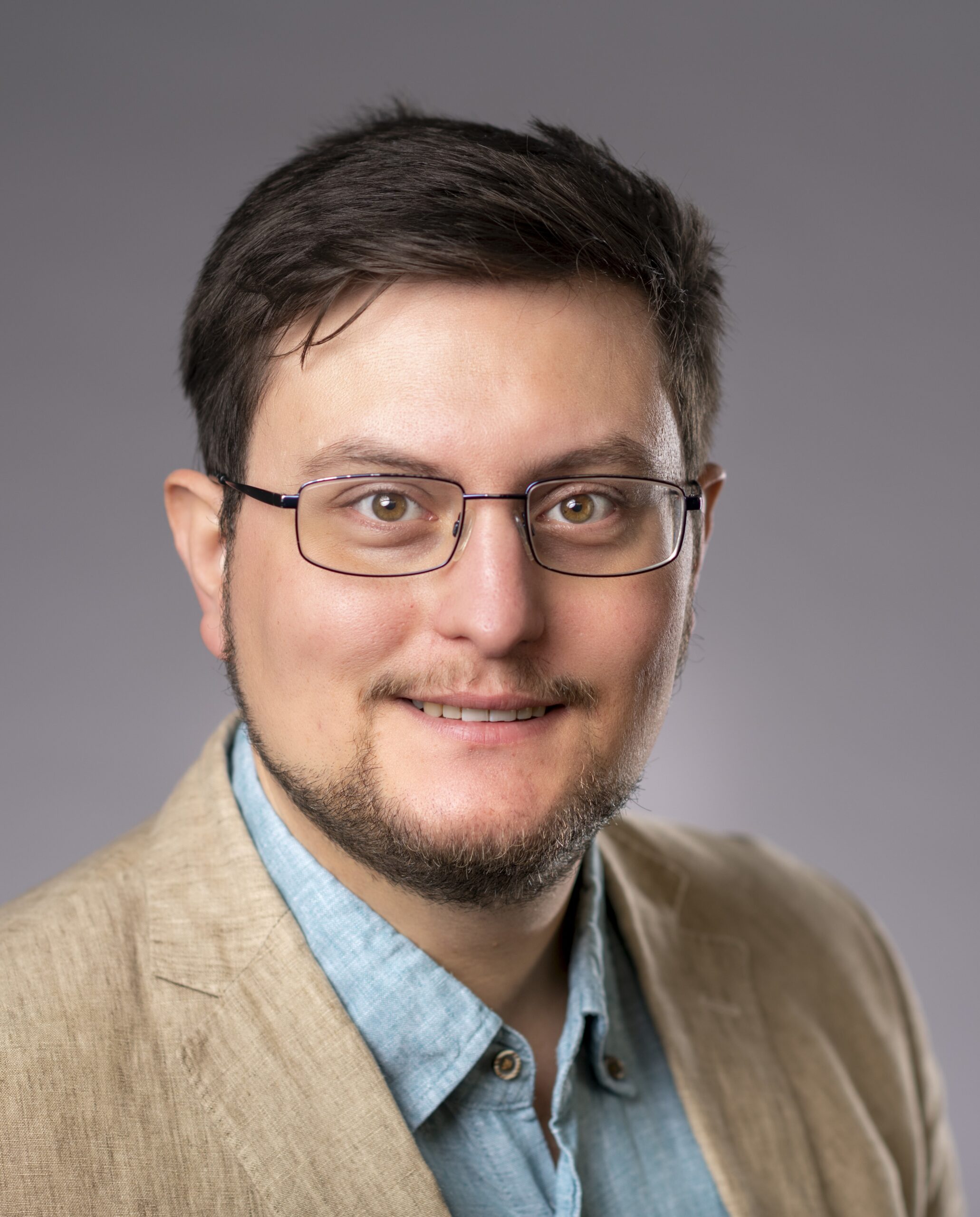
Read Niklas’s full bio
Niklas Hartmann is deputy university librarian at TUHH, where he also serves as subject librarian for process engineering. Trained as both an environmental scientist and in social studies of science and technology, his professional interests span open science and user services. His current work focuses on library design, information literacy, and governance of regional library systems.
Professional interests: Open science, information literacy, usability, universal design for library services
ORCID: 0000-0002-7328-3625
Silke Clausing, MA LIS
Hochschule Hannover – University of Applied Sciences and Arts (HSH) — Lower Saxony

Read Silke’s full bio
Silke Clausing teaches at Hochschule Hannover, where she leads internationalization in the Information Management degree programme. She teaches the fundamentals of cataloguing and indexing, including alphabetical cataloguing and the PICA library system.
Research focus: Internationalization of LIS curricula, cataloguing and indexing, library management systems (PICA)
ORCID: 0000-0001-5397-523X
Funding
An Internationalization Grant from Hochschule Hannover – University of Applied Sciences and Arts (HSH) funds the visit in part. Further support comes from TIB Hannover, the German Academic Exchange Service (DAAD), UVic Libraries, and the delegates’ home institutions.